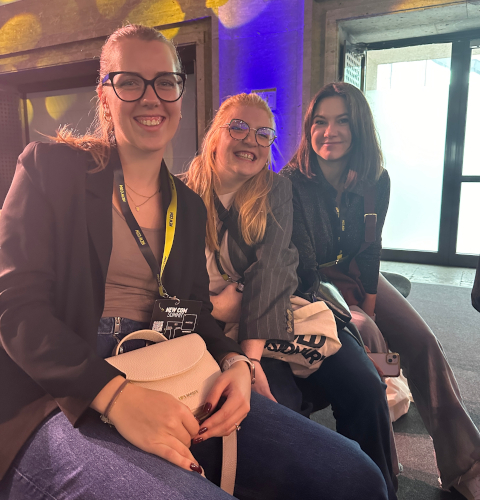
What impressed us most was the growing importance of diversity in advertising. Campaigns today must reflect the diversity of society – not as a buzzword, but as a genuine mindset. Only those who address people in their real-life context can build lasting trust.
That brings us to the second major theme of the summit: the Trust Gap. Between what companies communicate and what people actually perceive, there is often a gap. And this gap cannot be closed with more content, but only with real communication. Personal, authentic voices – whether from employees or partners – are becoming a decisive factor.
One statement that stuck with us:
“We no longer search for information, we search for identification.”
That captures the essence of modern brand communication. People no longer just want to know what you offer – they want to understand what you stand for.
Another fascinating topic: the interaction between AI and creativity. “Thought → AI → Action” – this is how the new workflow can be described. AI can structure ideas, accelerate processes, and recognize patterns, but meaning and direction still come from humans.
From Theory to Practice: What This Means for Amazon Marketing
Many of these insights translate directly into our daily work with Amazon. Amazon is still often seen primarily as a sales channel, but it has long been a powerful branding and communication platform.
When we talk about identification instead of information, it also means that brands need to take a stronger stance on Amazon. Images, copy, and brand environments can build trust when they are told consistently and evoke an emotional connection.
Especially on a marketplace where products can appear interchangeable, brand communication becomes the key differentiator. Diversity in visuals, a clear tone of voice, and authentic brand storytelling make all the difference.
The topic of “Sense Making” also plays an important role here: data, AI, and automation are powerful tools, but they only unlock their full potential when combined with a deep understanding of the target audience. In other words: only those who understand the human behind the search query can build truly relevant communication.
In short: Amazon is more than a marketplace – it’s a communication space.
And those who recognize and use it as such will gain not only clicks but long-term trust.
Our Conclusion
Communication in 2025 requires more Sense Marketing and Sense Making – a conscious creation of meaning. It’s not just about reach; it’s about relevance.
Or, as one speaker perfectly summed it up:
“Make it effective first, then make it efficient!”
We return to our daily work full of inspiration – and with one clear conviction:
Good communication starts with attitude.