Key points
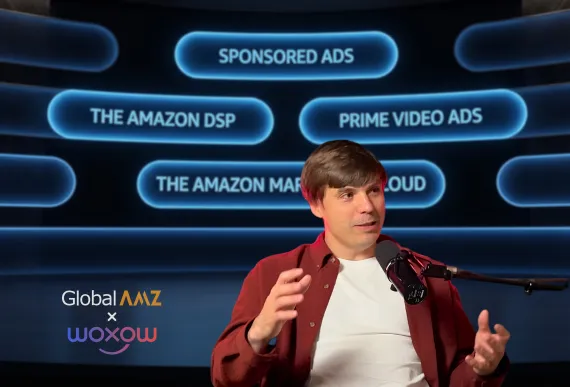
- Sponsored Ads, the Amazon DSP, Prime Video Ads and the Amazon Marketing Cloud now form one connected advertising system.
- With Sponsored Ads, the Amazon DSP, Prime Video Ads and the Amazon Marketing Cloud, brands reach streaming audiences using Amazon's purchase data and adjust campaigns while they run.
- Start with brand registry, realistic expectations and a budget that does not sit in a single channel.
What are Amazon DSP, Prime Video Ads and Amazon Marketing Cloud?
They are three building blocks of Amazon Ads that form one system together with Sponsored Ads.
- Amazon DSP: a demand-side platform through which brands buy video and display ads on Amazon and on third-party websites and apps. It relies on Amazon’s own purchase data.
- Prime Video Ads: ads in the ad-supported tier of Prime Video, booked through the Amazon DSP.
- Amazon Marketing Cloud: a data clean room in which our team runs SQL queries to analyse our clients’ customer journey across all Amazon channels.
Amazon’s advertising business began with classic Sponsored Ads inside the marketplace. Step by step, an off-site advertising network was added, then video advertising and most recently Prime Video Ads. Today the Amazon DSP competes directly with Google’s display and search business. Google built its position over many years. Amazon needs much less time for this, backed by purchase data that competitors do not have.
The Amazon Marketing Cloud sets the offer apart from classic TV. You can measure and adjust performance during the campaign rather than after the fact. Amazon’s AI systems also work in the background, from review analysis and product recommendations to Rufus, Amazon’s AI shopping assistant. The same technology now shapes targeting and campaign optimisation.
Why is Amazon more than a marketplace?
Today Amazon is at once a logistics company, a cloud provider through AWS, an AI company and one of the largest advertising providers in the world. The picture of a pure shopping portal falls short.
Our founder Gregor Leopold has worked in e-commerce and on Amazon since 2008. Before the agency, the team ran its own Amazon storefront. Today GlobalAMZ serves brands across industries, including many in pharma and other regulated sectors. So we know both sides: running our own storefront and advising large industrial companies launching their first B2C project after a long company history.
From our work, we tell clients plainly: whether your brand is on Amazon is no longer your decision alone. Unless a category is legally excluded, such as prescription medicines, it is already there in some form. Third-party sellers, AI models and data crawlers already use Amazon as the default product database for the open web.
This also explains why the system feels more complex today. Sponsored Ads have grown from a few bullet points and one product image into a layered content and advertising system. The market has become professional. The barrier today is real analytical capability, not just a product listing.
How does Amazon differ from Kaufland, Otto and Walmart?
Amazon increasingly sends advertising traffic to destinations outside its own marketplace. Other retailers keep the traffic on their platform. Retail media is growing fast. Kaufland, Otto and internationally Walmart and Target are building out advertising on their marketplaces. The classic model: you advertise your product at the retailer, and the traffic stays there.
With Prime Video, streaming ads are increasingly allowed to link to destinations entirely outside Amazon. A few years ago this was unthinkable. For service businesses and for brands that do not sell products through Amazon, this opens a door that retail media used to keep shut.
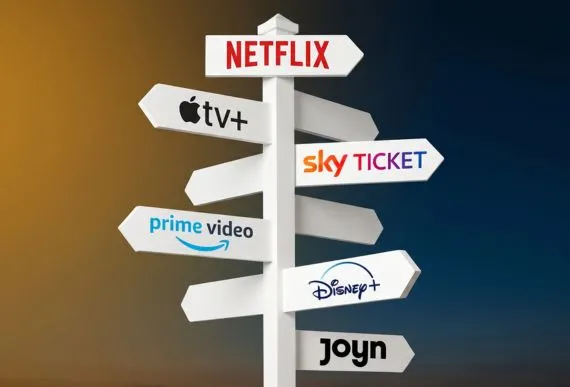
Since Amazon introduced its ad-supported tier, many Prime subscribers see ads. This audience has only recently become reachable through a single advertising platform. It spans Amazon’s own service and other streaming providers in the network. In Germany, Netflix and Disney+, for example, can also be booked through the Amazon DSP (as of November 2026).
What do Prime Video ads cost and how does targeting work?
Prime Video ads do not need a high minimum commitment like classic TV, but a budget above a practical threshold. Amazon’s advertising stack works more like a dial than a switch. You can turn campaigns on and off. Below the threshold, however, the operational effort outweighs the return.
From our work: where the threshold for meaningful streaming campaigns lies depends heavily on the product category and its CPMs. More important than the budget size is who has access today. Mid-sized brands that were priced out of classic TV placements can now run targeted streaming campaigns.
Targeting also works differently from classic media buying. You do not book a demographic environment as in print or TV. Amazon campaigns are built on keywords, interests, purchase behaviour and audiences of competitor buyers. With lookalike audiences, brands invest early in data and then use these audiences across the whole funnel, from awareness to retargeting.
Once a campaign has gathered enough data, you cut weak segments in near real time and reallocate the budget. This kind of in-flight optimisation does not exist in classic TV buying. Our HYLO case study shows an example of Amazon DSP in practice.
What mistakes do brands make when entering streaming advertising?
The most frequent mistake has nothing to do with creative or targeting but with brand registry. These are the mistakes we see again and again in our work:
- No brand registry: brands that have not registered and protected their brand on Amazon cannot access the full streaming funnel, no matter how good the strategy is.
- Launching without upfront analysis: an internal champion or a leadership mandate often pushes teams to launch before it is clear which results are realistic. This applies especially when they compare ROAS with channels like TV that were never measured that way.
- Everything in one channel: putting the entire media budget into one channel, whether Amazon, Google or TV, is an unnecessary risk. Spreading it across a few channels that perform well remains sound.
Brands often overestimate the production effort. Amazon offers its own tools for creating ad assets. Self-produced content, such as material from your own archive, also works well there. Twitch is also owned by Amazon and is still underused. From our work: we have even run successful campaigns for ophthalmology there, because the audiences spend so much time in front of screens.
How should brands start with Amazon streaming advertising?
Start with brand registry and compliance, then with tests. Registry decides which parts of the funnel are accessible at all.
- Sort out brand registry and compliance first.
- Start testing with realistic expectations and proper analytics.
- Choose a channel mix that does not put the entire budget into one channel.
- Do not wait too long: CPMs are rising and more categories are being unlocked for streaming advertising. Testing will become more expensive.
Brands that start now, even with modest budgets, build the audience and performance data that will count once competition in this space grows. More on our approach is on our Amazon Media page. How social media and Amazon interact is covered in From Attention to Conversion: How TikTok and Amazon Work Together.
For more on how these dynamics play out in client work, hear Gregor Leopold explain it in full on Marketing Meets Technology.
Marketing Meets Technology: Watch the video on YouTube
Sources: [1] Amazon Ads, [2] Netflix, [3] Amazon DSP